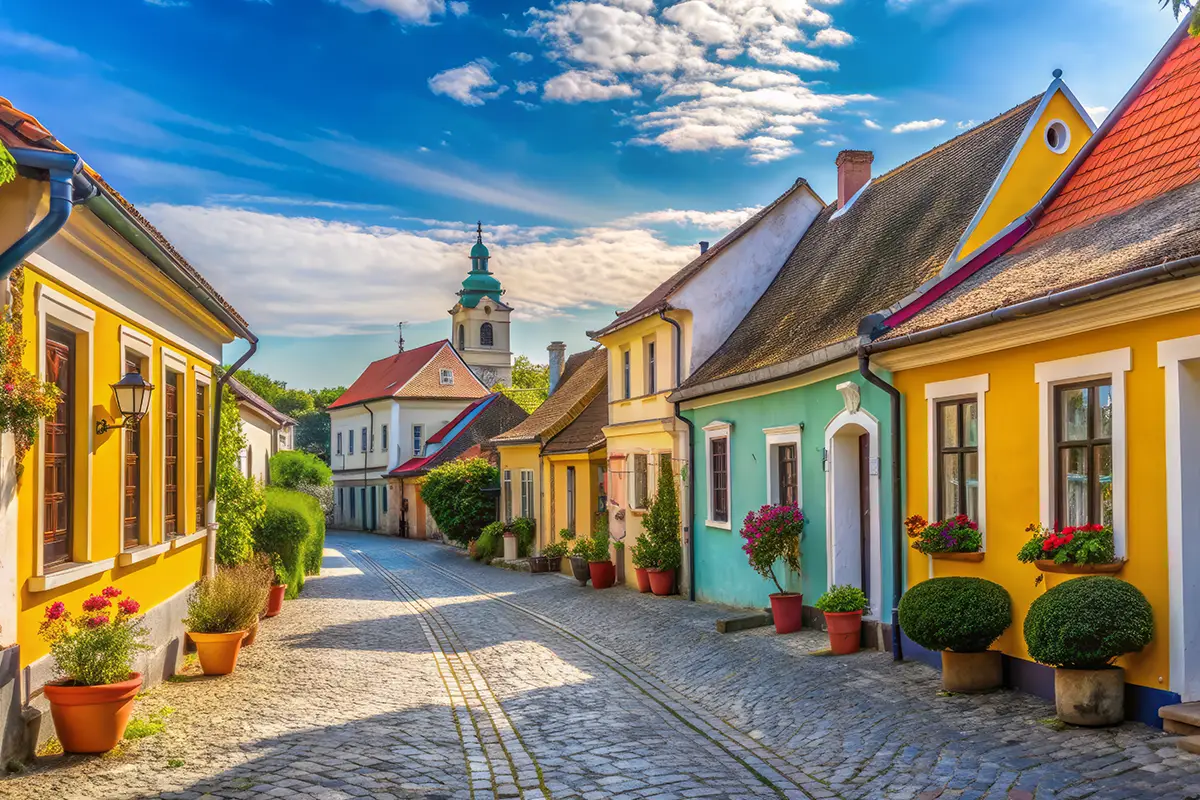
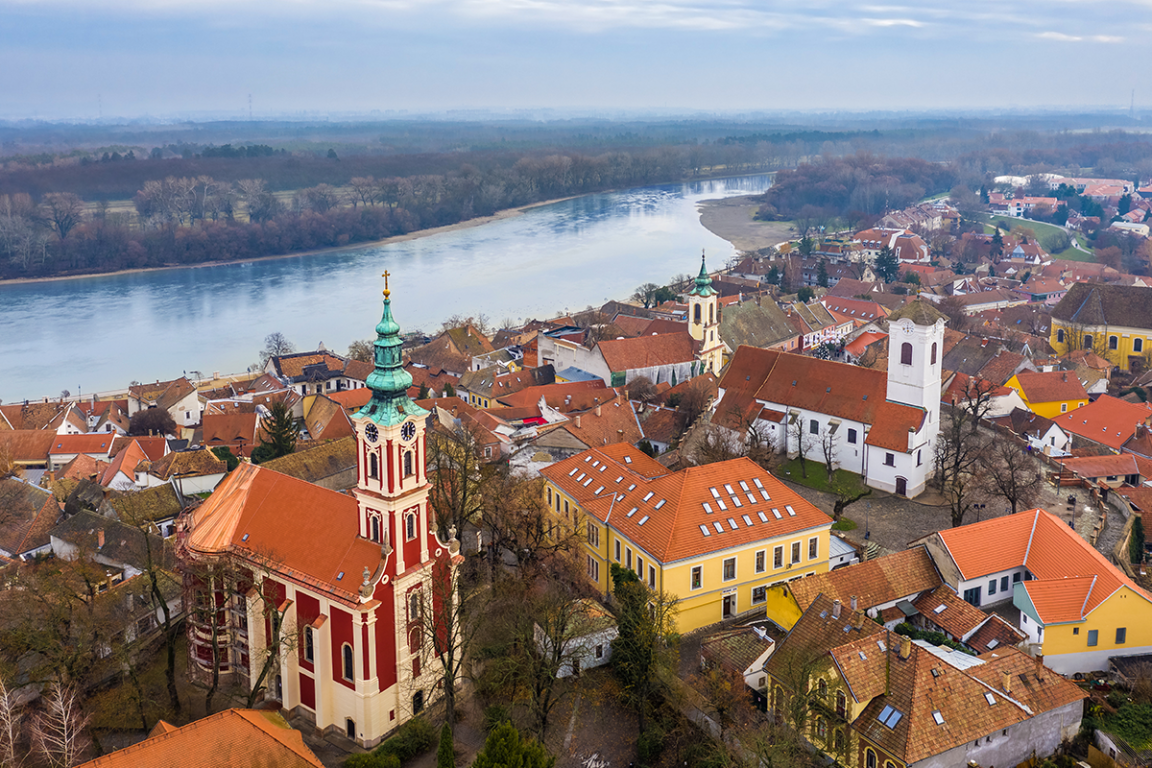
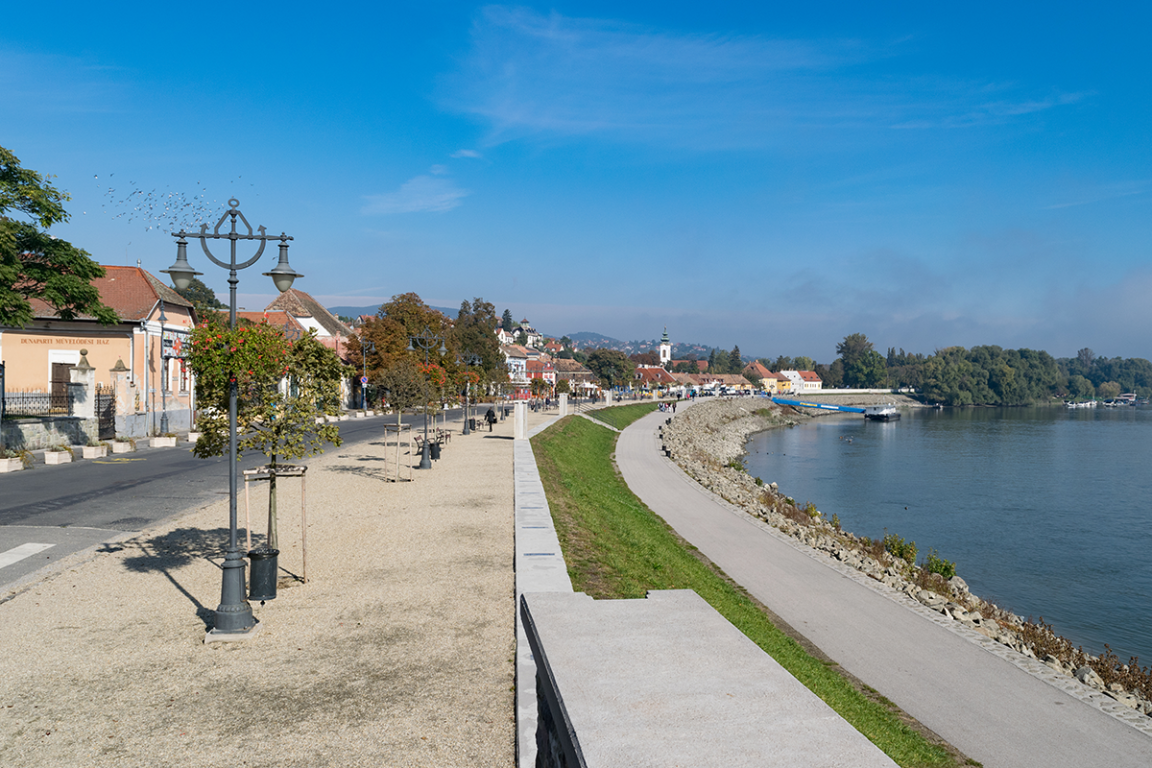
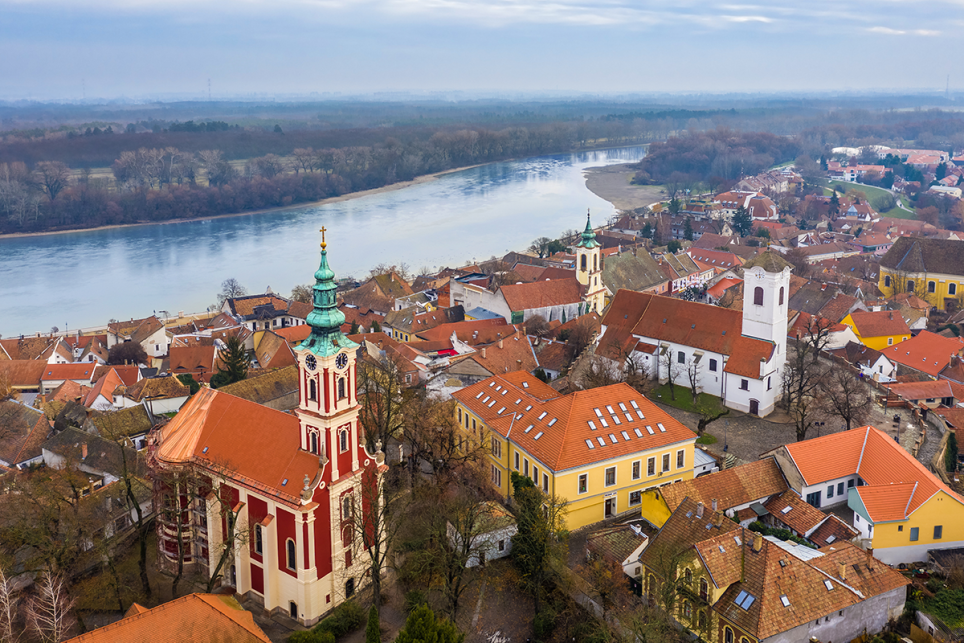
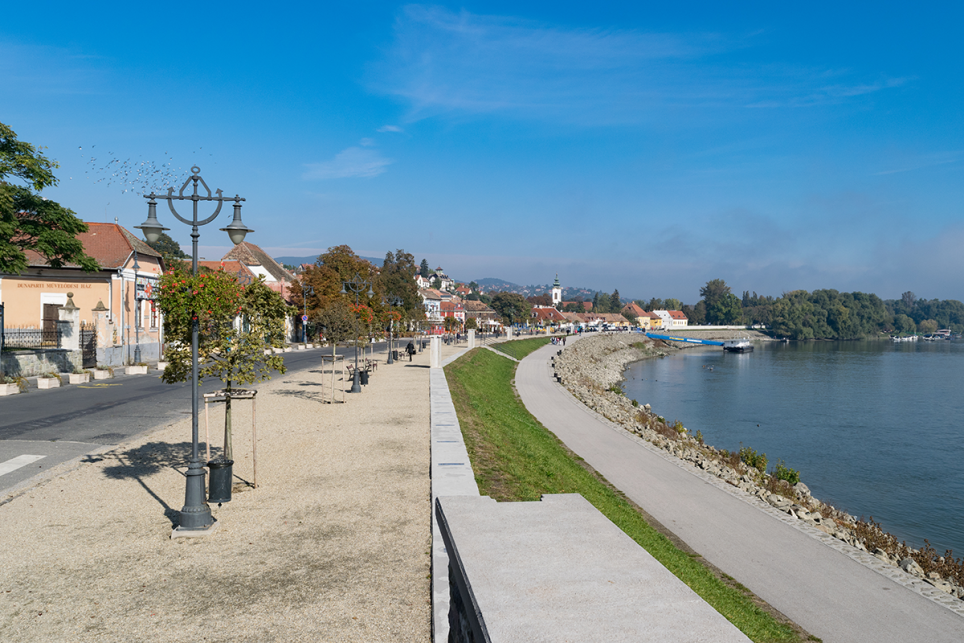
There are towns you visit. And then there’s Szentendre—a place that feels painted rather than built. It lies just north of Budapest, hugging the Danube with an artist’s flair and a Balkan soul. I wandered into it like one steps into a daydream, half-expecting violin music to drift from the chimneys. You don’t go to Szentendre for ticking sights off a list; you go for the way it makes your shoulders drop and your imagination stir.
The tale of Szentendre is a complex layering of cultures—Roman foundations, Magyar roots, and perhaps most distinctively, a 17th-century Serbian influence. Following the 1690 Great Serb Migration, Orthodox refugees settled here en masse, fleeing the Ottoman Empire. What they brought wasn’t just their lives and faith, but a visual language: iconostasis-adorned churches, Byzantine frescoes, and a distinctly southern warmth that lingers to this day.
Before that, this area had been inhabited since Roman times (known as Ulcisia Castra, “Wolf Castle”), but it was the Serbs who gave Szentendre its lasting soul. Their presence became so defining that by the 18th century, it was often referred to as “Serb Town,” its skyline pierced by Orthodox spires instead of Catholic steeples.
Churches With Two Histories
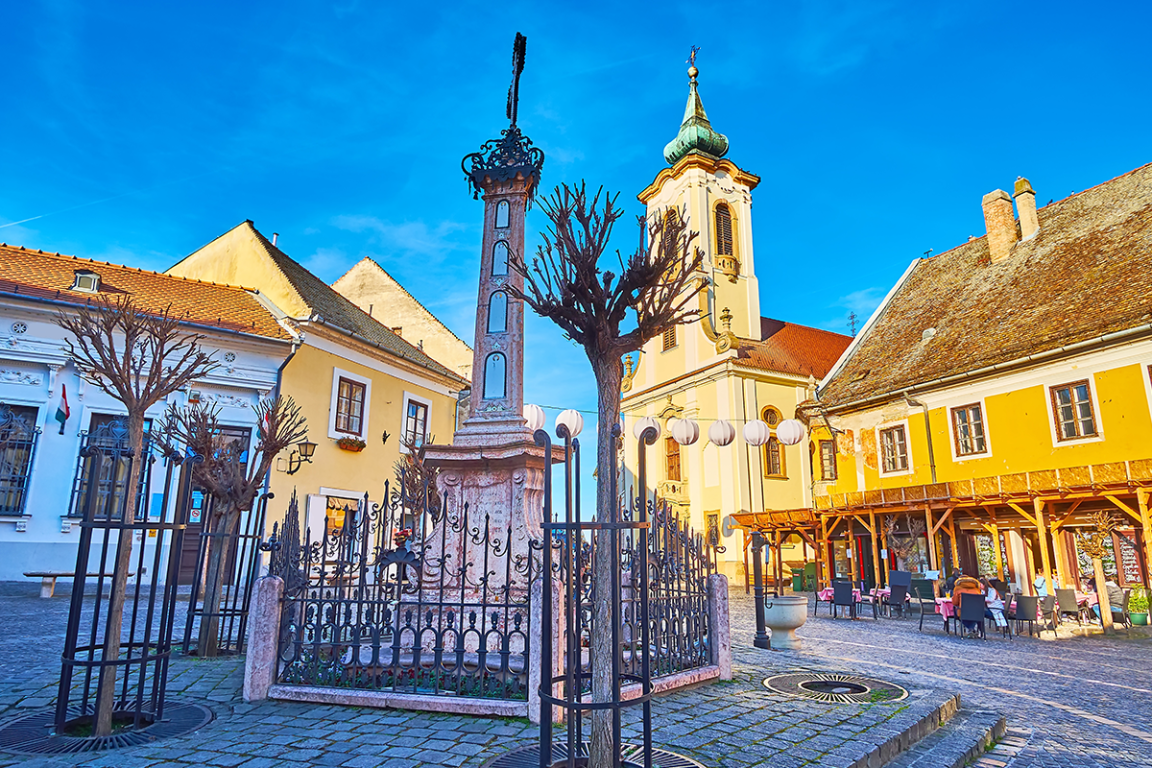
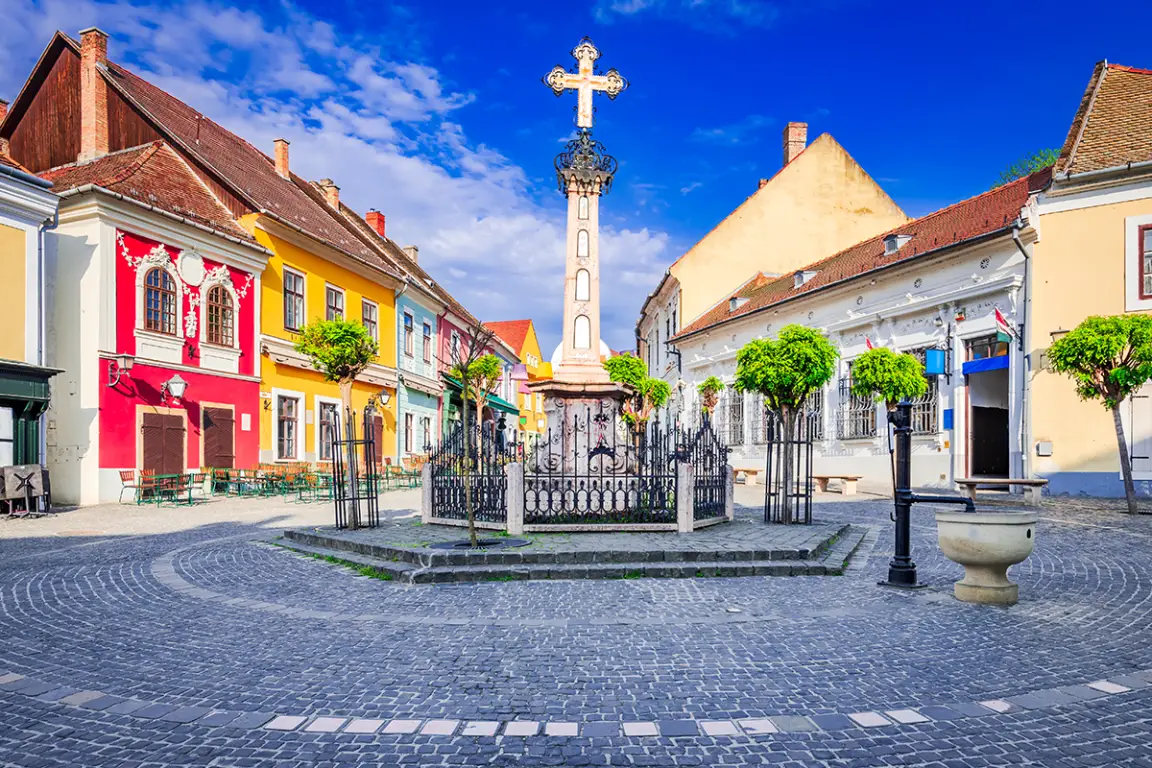
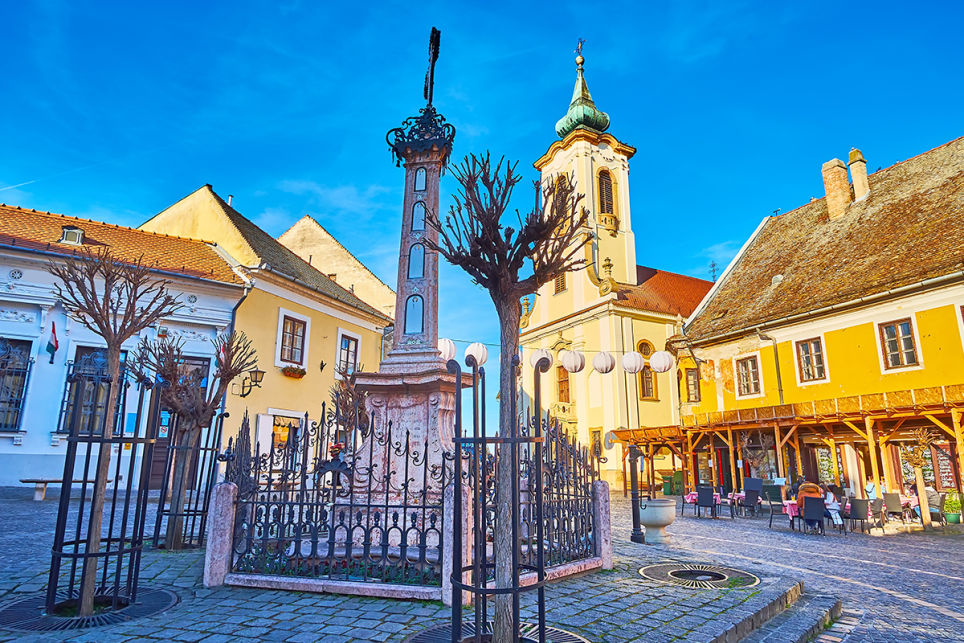
Wandering the town is like flipping between religious worlds. The Blagovestenska Church, nestled beside the main square, is a delicate baroque jewel with Serbian Orthodox icons. Peek inside, and you’ll see vivid scenes of saints with expressive Eastern eyes, painted on wood like centuries-old comic panels.
Then there’s the Belgrade Cathedral (Preobrazenska), the largest of the Orthodox churches in town, built in 1752. It’s often missed behind leafy gardens, but step inside, and you’re embraced by a glowing forest of gold leaf, incense, and gentle lament.
The Catholic Church of St John the Baptist adds a Latin flair—a reminder of Habsburg patronage and Hungarian continuity. It’s all here: baroque facades, onion domes, and centuries colliding politely under a blue Hungarian sky.
Where Artists Found Their Muse
After the trauma of World War I, Hungary needed beauty. And so did its artists. They came here, to the calm of Szentendre, and turned it into an art colony. From the 1920s onwards, this became a refuge for creatives seeking light, folklore, and a bit of magic realism.
The result? A town saturated with galleries. The Ferenczy Museum honours Károly Ferenczy and his painter family, whose plein-air style captured the shimmering air of the Danube Bend. Meanwhile, the Margit Kovács Museum showcases the whimsical ceramic sculptures of Hungary’s most beloved clay whisperer. Her Madonna figures and rustic peasant women are like three-dimensional folk songs.
Even today, Szentendre is dotted with tiny, open studios—doors flung open, brushes drying in the sun, a cat napping near half-finished landscapes. The artistic legacy here is not museum-bound. It breathes.
Goulash With a Balkan Accent
If Szentendre is a painting, then its food is the scent-laden frame. While Hungarian staples like gulyás and lángos are present and correct, this town also offers dishes with a nod to its Serbian roots—smokier, spicier, more grill-forward.
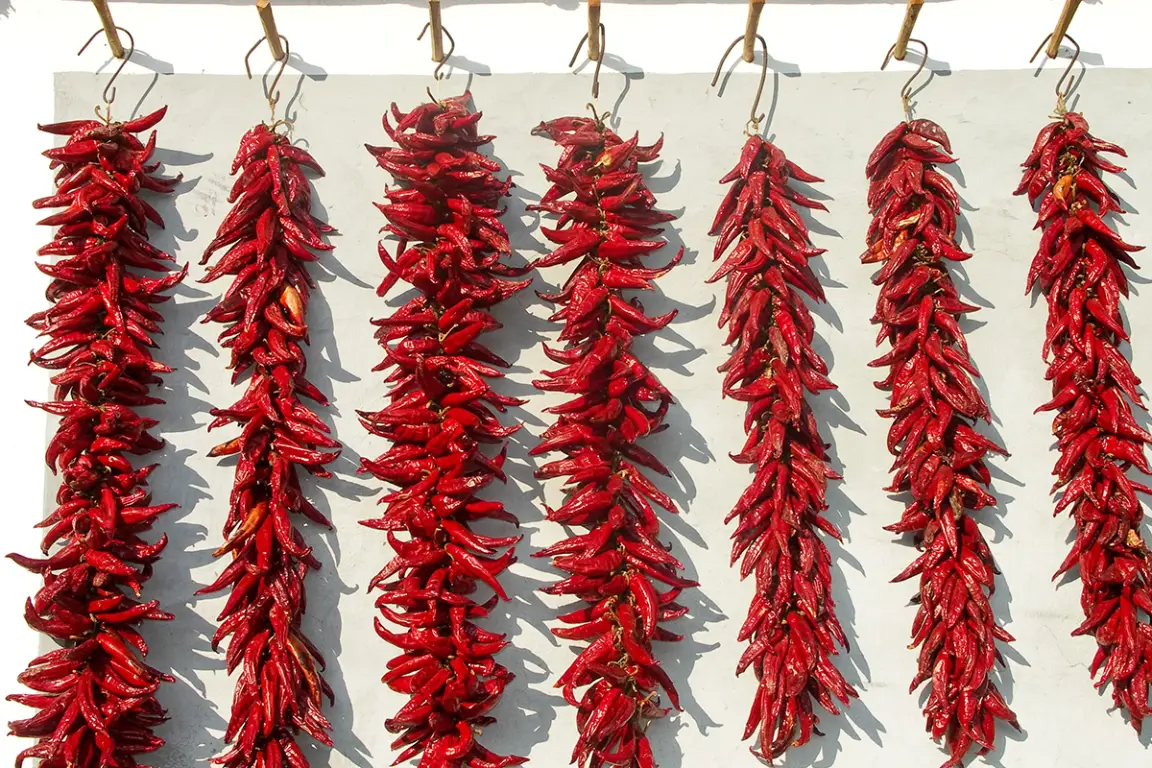
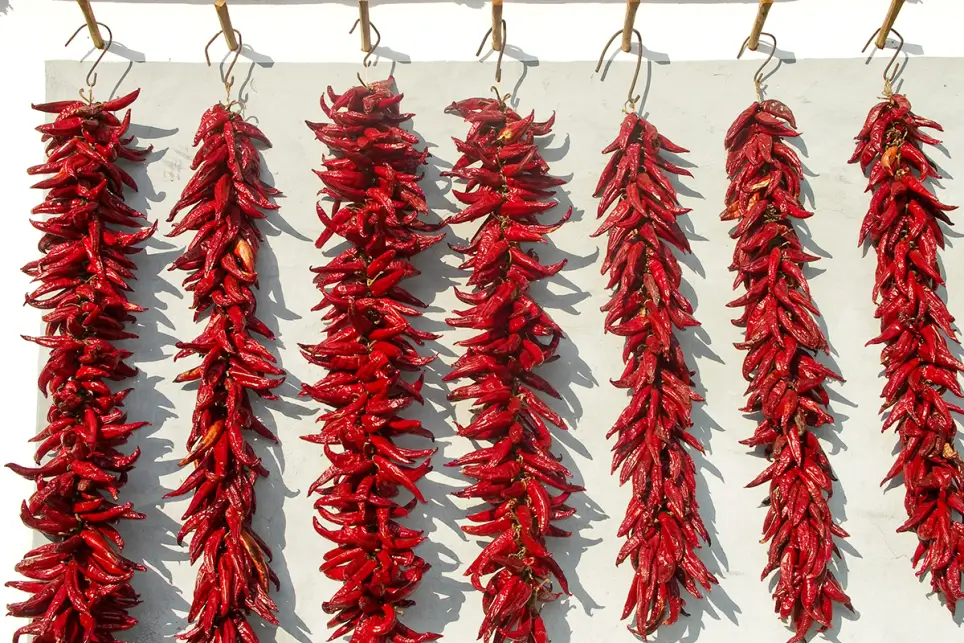
Try čevapi (minced meat sausages) or pljeskavica (a Balkan burger) with ajvar, a roasted pepper relish that’s sunshine in a jar. Local taverns serve them alongside szilvapálinka, a plum brandy that doubles as welcome and warning.
Don’t miss cukrászdas (pastry shops) either—tiny art-deco cafés offering Dobos torta, Esterházy slices, and sometimes, rakija-laced surprises. The sweet tooth is taken seriously here, especially when paired with strong black coffee and idle conversation.
A Town That Wears Its Art
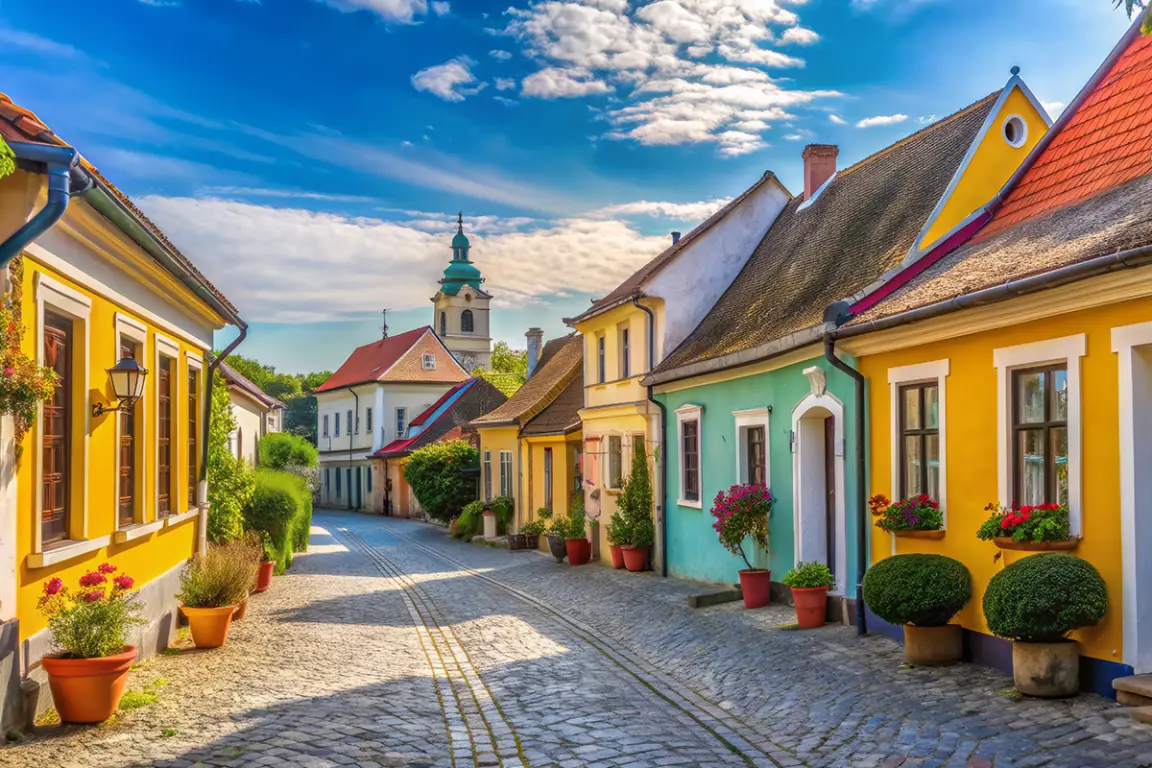
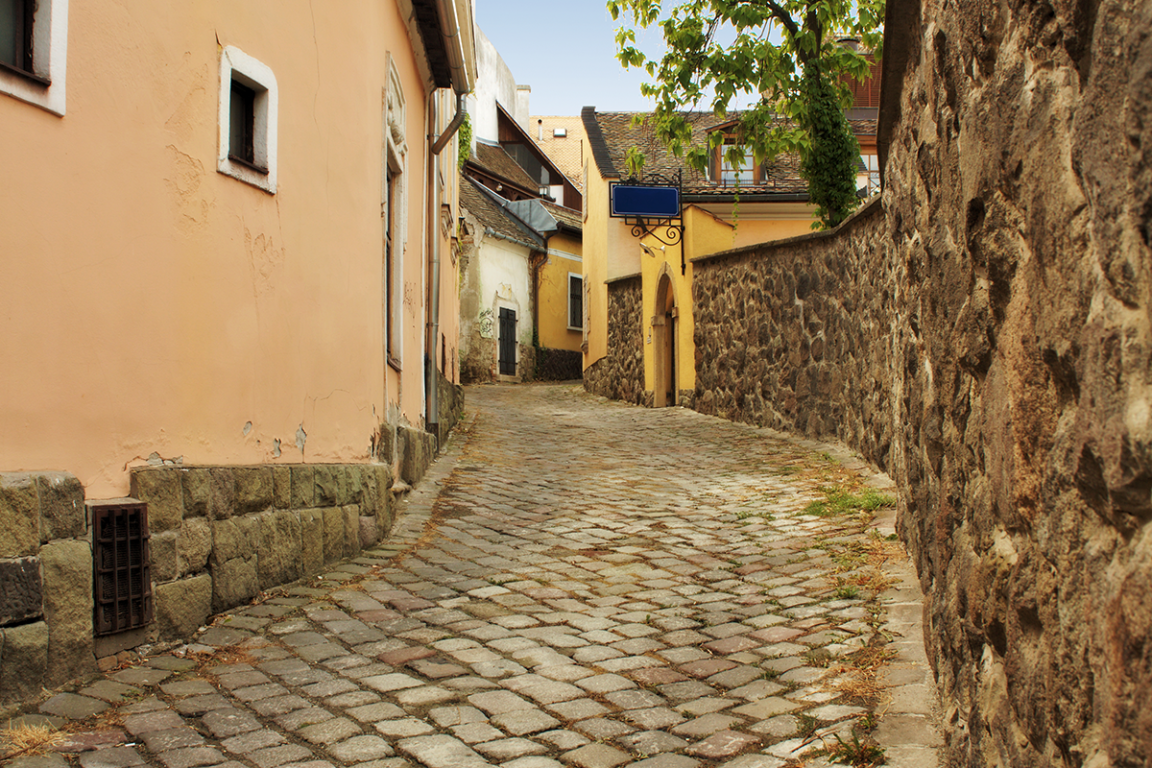
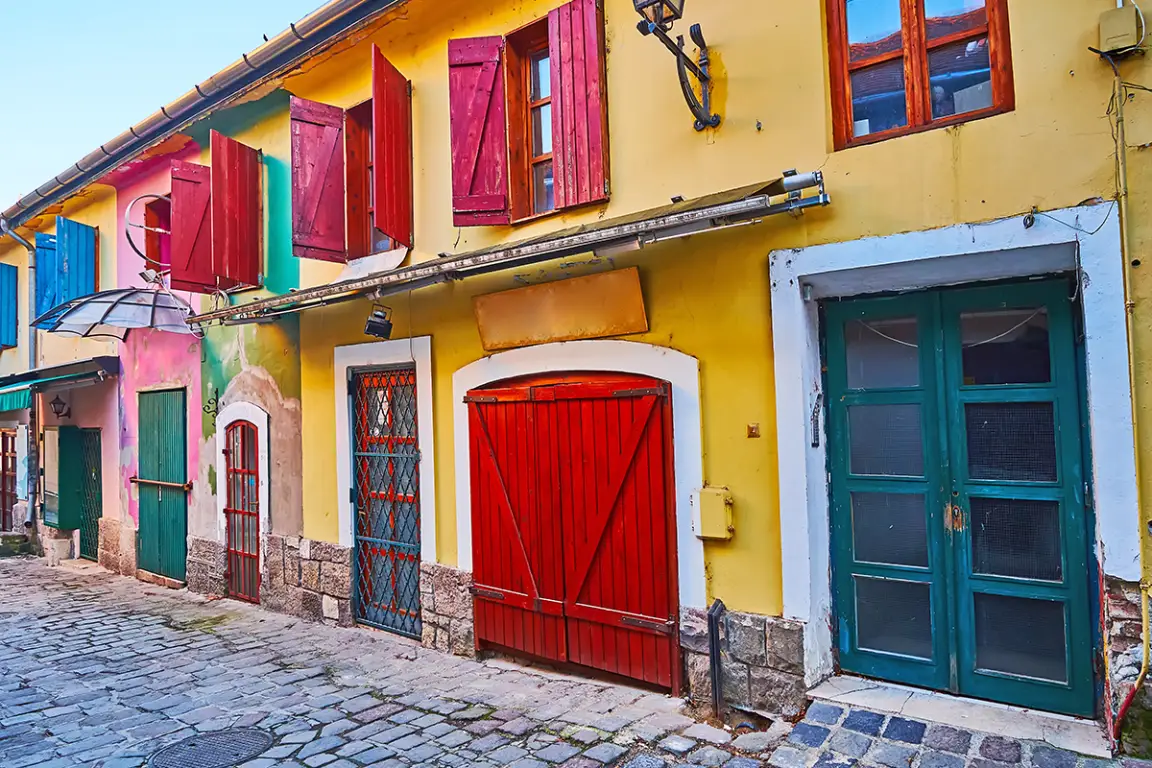
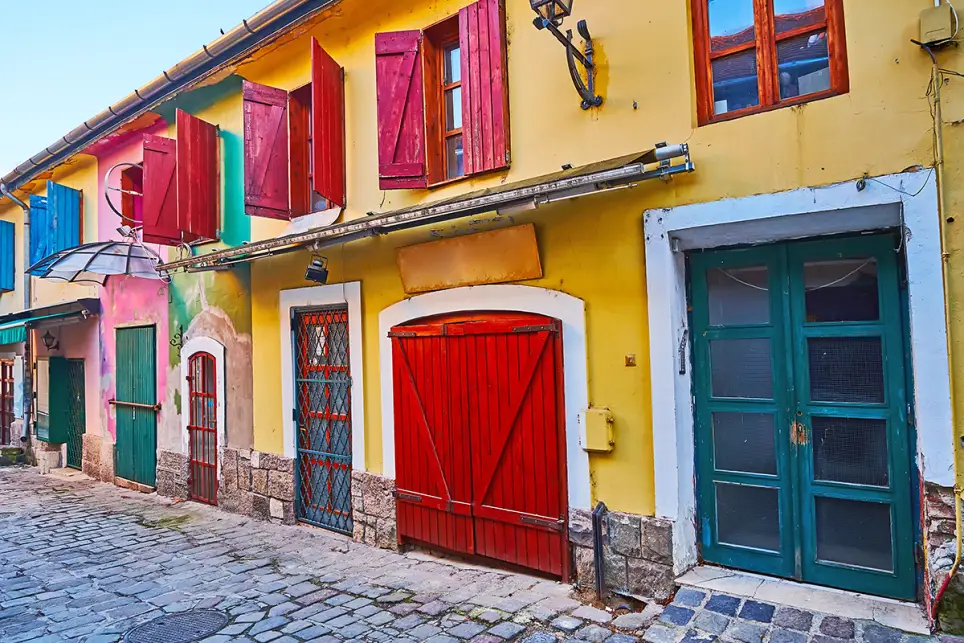
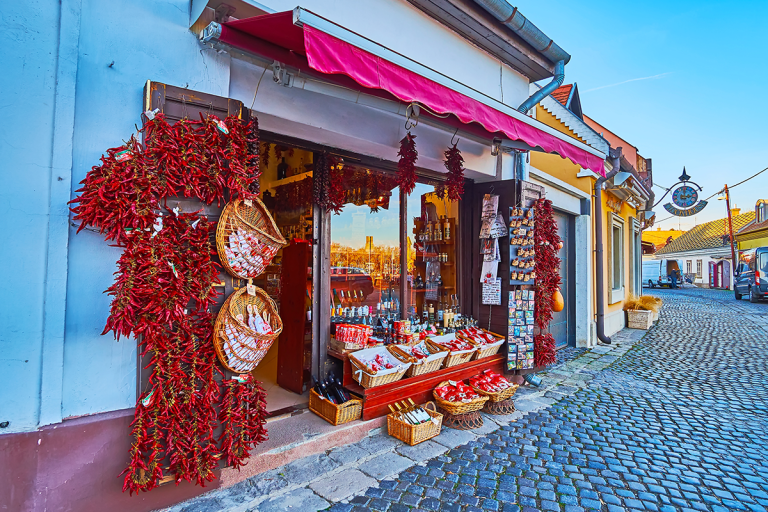
Architecture here isn’t grandiose; it’s charmingly mismatched. Narrow cobbled lanes curve and tangle like spilled ribbon. Buildings tilt gently, as if nodding to each other. Windows come in all shapes. You’ll find baroque arches, Orthodox niches, and Austro-Hungarian shutters painted in joyful defiance of uniformity.
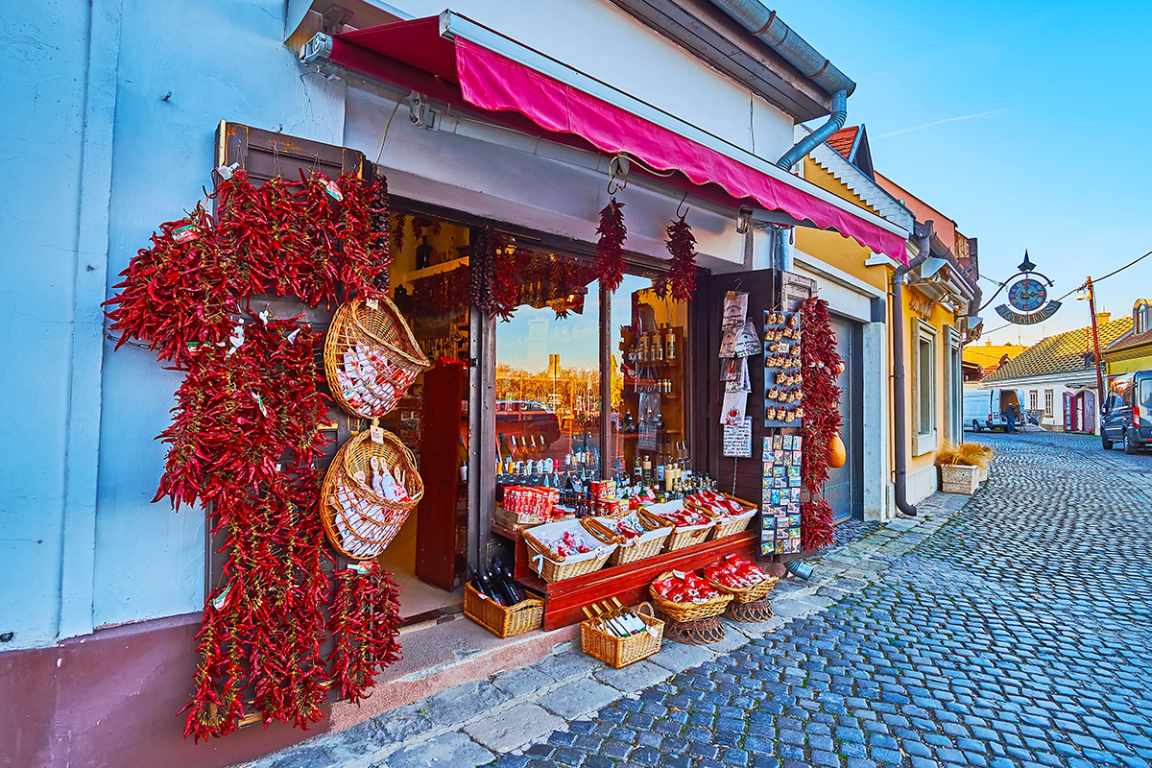
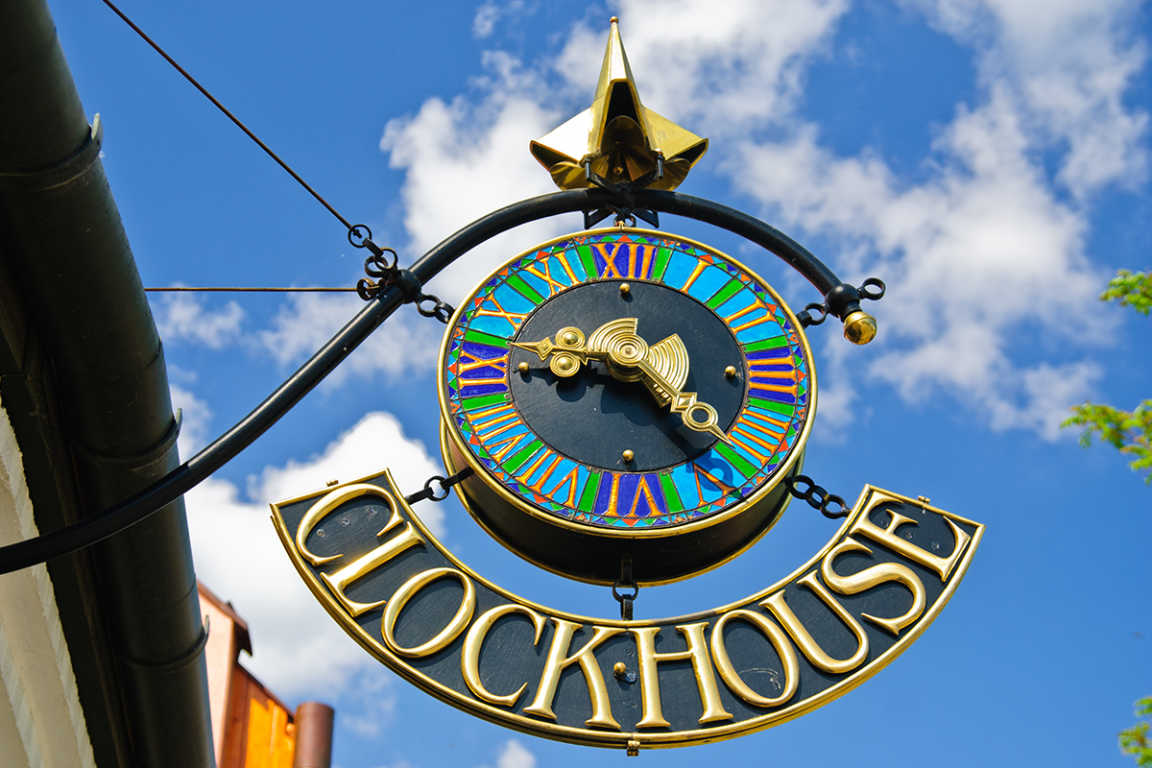
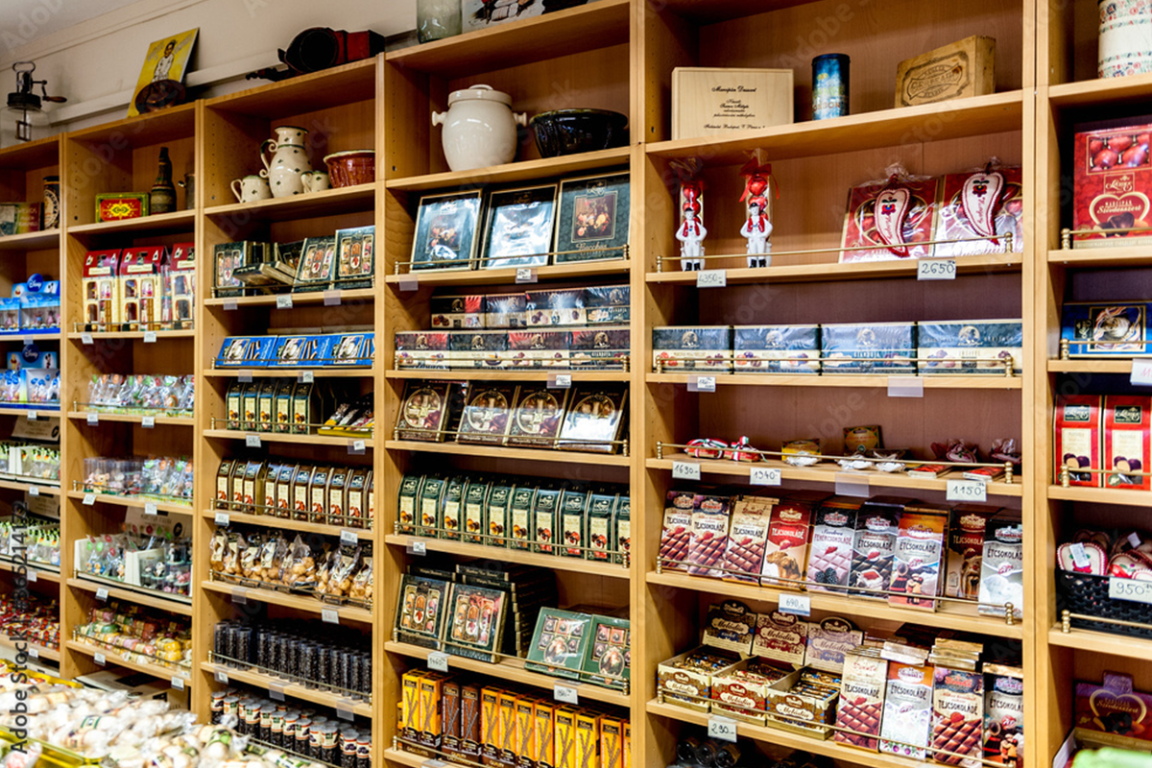
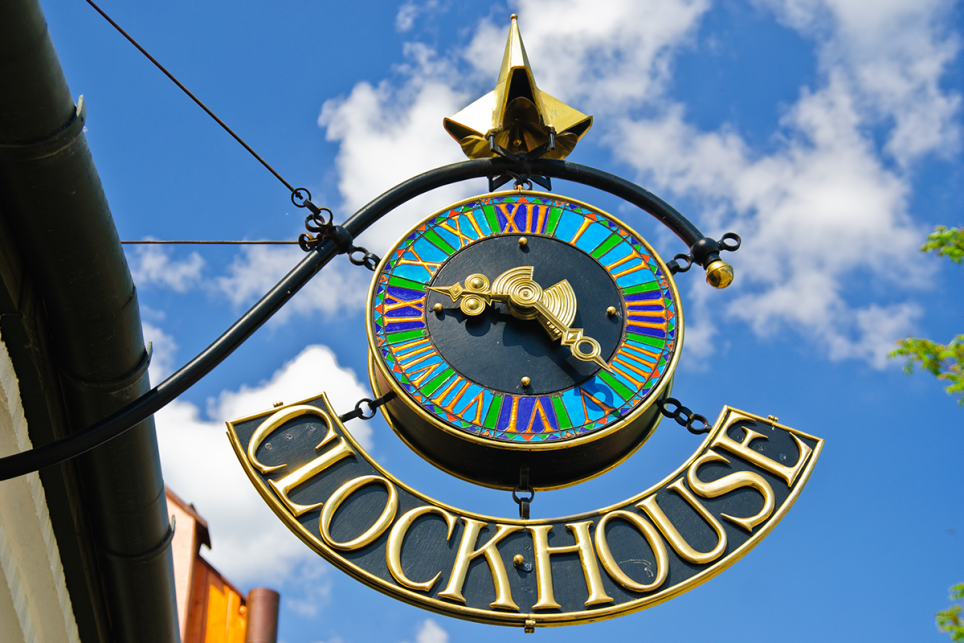
But it’s the painted storefronts that really sing. Florists, hatters, and curio shops are hand-lettered in curly fonts, often decorated with flowers or cheeky animals. Even the Marzipan Museum, a gloriously odd confectionery hall of fame, feels like a joke shared with tourists who happen to be in on the whimsy.
Language That Lingers
Hungarian is the default here, naturally. But there’s a delightful polyglot undertone. Old Serbian inscriptions can still be spotted on plaques and memorial stones. And in markets, you might catch older locals slipping between Magyar, Serbo-Croatian, and even German—testimony to the layered tongues of this borderland town.
One charming tradition: many shopkeepers greet you not with “szia” but with “üdvözlöm” (I welcome you), an old-world courtesy that sets the tone for everything else.
The Part That Stays with You
As twilight settled on the cobbles, and the church bells rang not quite in sync, Szentendre felt less like a destination and more like an echo. Not loud, not flashy. Just… persistent. Like the memory of a story told to you as a child and half-believed ever since.
I sat on a bench by the river, pálinka warming my thoughts, and watched as lights blinked on across the water. Somewhere, someone was singing. And it could have been in Hungarian. Or Serbian. Or just the Danube humming to itself.
Did You Know?
Szentendre means “Saint Andrew”, named after the medieval patron saint of the original church on the hill.
It once had nine Orthodox churches, though only five are still active today.
The Marzipan Museum features a life-size marzipan sculpture of Michael Jackson.
The town has been the setting for several Hungarian films and is popular for wedding photo shoots due to its painterly backdrop.
Its Christmas market features both Hungarian and Balkan holiday traditions, blending carols and folklore from both sides of the former empire.